I wanted to make a demo how to hack radio devices. It would need to be easy to understand, cheap and easy to replicate by someone else.
Demo device
First let’s look what device to hack. The best option i could think of is the cheapest wireless doorbell i could find. This one cost me 50 zł (about 12 euro). You might have one at home.
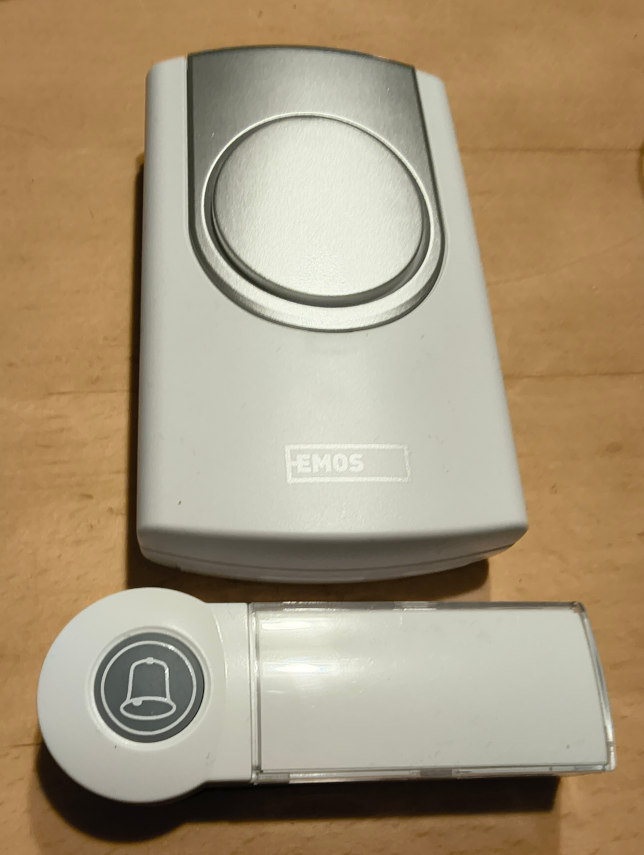
Another very cheap device might also be ok, as long as it works on the 433-434 MHz frequency band (most of them do, sometimes it’s written on the box) and uses OOK modulation (most cheap devices do).
Radio equipment
Radio equipment can be expensive. A cheap Adalm-pluto clone will cost around 150 euro. A Flipper Zero is around 200 euro. A Hackrf with Portapack will cost even more. Also there is either a steep learning curve (adalm pluto) or it’s just pressing buttons on a device without fully understanding what is going on (flipper zero).
I chose a simpler option:
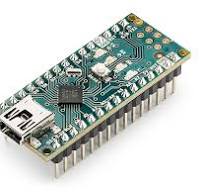
Arduino nano (5 euro):
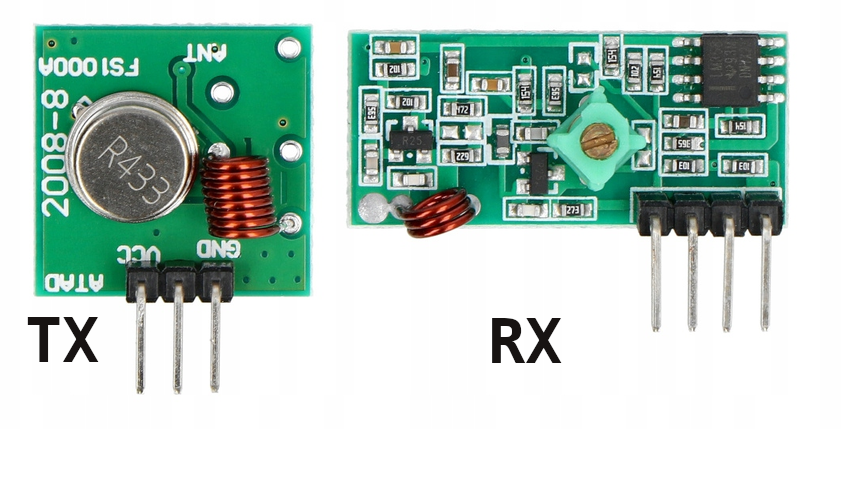
A 433 MHz transmitter module (1.5 euro when bought with the accompanying receiver board which we will not use now):
 And an rtl-sdr usb dongle (20 euro, expensive but well worth it):
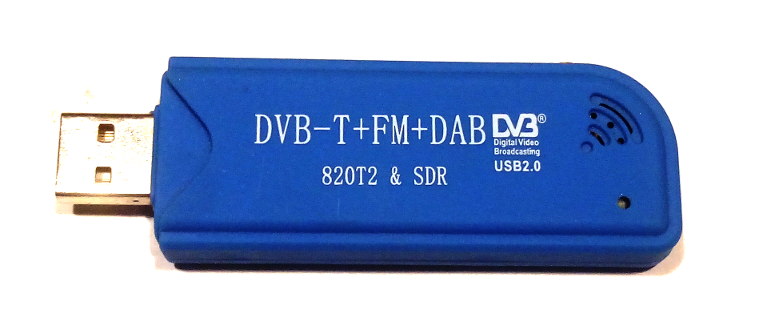
Note that there are much more expensive versions, but the cheapest one is ok as long as it can be used as an SDR (software defined receiver). It should have RTL2832 and R820T or R820T2 chips inside (often it does not say).
While you’re at it, search for the many uses of an rtl-sdr. It’s a very versatile device!
Sniffing the radio traffic
Install the rtl-433 software. Best do it on linux, although i think windows also will work, but might need additional tinkering.
Most linux distributions will have a package that you can just install (for example on debian/ubuntu: apt install rtl-433 )
Plug in the rtl-sdr dongle. If the remote control is close enough, then you don’t need to connect an antenna.
Run:
rtl_433 -A
And press the remote. rtl-433 should print something like:
Detected OOK package 2026-11-23 19:12:21.821222
_ _ _ _ _ _ _ _ _ _ _ _ _ _ _ _ _ _ _ _ _ _ _ _ _
model : Elro-DB286A ID : dd762a6c
Modulation: ASK Freq : 434.0 MHz
RSSI : -1.2 dB SNR : 27.7 dB Noise : -28.9 dB
Analyzing pulses...
Total count: 1188, width: 2594.67 ms (2656940 S)
Pulse width distribution:
[ 0] count: 684, width: 489 us [483;496] ( 501 S)
[ 1] count: 504, width: 1497 us [1490;1502] (1533 S)
Gap width distribution:
[ 0] count: 648, width: 1533 us [1527;1540] (1570 S)
[ 1] count: 504, width: 526 us [521;533] ( 539 S)
[ 2] count: 35, width: 7024 us [7018;7028] (7193 S)
Pulse+gap period distribution:
[ 0] count: 1152, width: 2023 us [2014;2034] (2072 S)
[ 1] count: 35, width: 7514 us [7510;7521] (7694 S)
Gap+pulse period distribution:
[ 0] count: 1, width: 496 us [496;496] ( 508 S)
[ 1] count: 432, width: 2023 us [2017;2026] (2072 S)
[ 2] count: 360, width: 3030 us [3023;3033] (3103 S)
[ 3] count: 360, width: 1016 us [1009;1019] (1040 S)
[ 4] count: 35, width: 7514 us [7512;7520] (7694 S)
Timing distribution:
[ 0] count: 1188, width: 505 us [483;533] ( 517 S)
[ 1] count: 1152, width: 1518 us [1490;1540] (1554 S)
[ 2] count: 35, width: 7024 us [7018;7028] (7193 S)
[ 3] count: 1, width: 15021 us [15021;15021] (15381 S)
Level estimates [high, low]: 14339, 590
RSSI: -1.2 dB SNR: 27.7 dB Noise: -28.9 dB
Frequency offsets [F1, F2]: 3199, 0 (+50.0 kHz, +0.0 kHz)
Guessing modulation: Pulse Width Modulation with multiple packets
view at https://triq.org/pdv/#AAB02B042301F805ED1B703AAC81819081818190819081818190818190909081908190819090818190818190908255+AAB02B040101F805ED1B703AAC81819081818190819081818190818190909081908190819090818190818190908355
Attempting demodulation... short_width: 489, long_width: 1497, reset_limit: 7029, sync_width: 0
Use a flex decoder with -X 'n=name,m=OOK_PWM,s=489,l=1497,r=7029,g=1541,t=403,y=0'
[pulse_slicer_pwm] Analyzer Device
codes : {33}dd762a6c8, {33}dd762a6c8, {33}dd762a6c8, {33}dd762a6c8, {33}dd762a6c8, {33}dd762a6c8, {33}dd762a6c8, {33}dd762a6c8, {33}dd762a6c8, {33}dd762a6c8, {33}dd762a6c8, {33}dd762a6c8, {33}dd762a6c8, {33}dd762a6c8, {33}dd762a6c8, {33}dd762a6c8, {33}dd762a6c8, {33}dd762a6c8, {33}dd762a6c8, {33}dd762a6c8, {33}dd762a6c8, {33}dd762a6c8, {33}dd762a6c8, {33}dd762a6c8, {33}dd762a6c8, {33}dd762a6c8, {33}dd762a6c8, {33}dd762a6c8, {33}dd762a6c8, {33}dd762a6c8, {33}dd762a6c8, {33}dd762a6c8, {33}dd762a6c8, {33}dd762a6c8, {33}dd762a6c8, {33}dd762a6c8
Making sense of the above
Go to the triq.org url in the message above. In my case it was:

You can see the modulation is OOK, which is on-off keying. So the transmitter is just either turned on or off. Most cheap devices will use OOK.
The triq.org link will let you visualize the modulation.
Looking at my example above, the message is made of the same frame sent multiple times.:
- the frame is 33 bits long
- a 1 bit is represented by a 500us of the transmitter being on and 1500us of the transmitter being off
- a 0 bit is represented by 1500us of the transmitter being on and 500us of the transmitter being off
- there is a 7700us break between frames
Note: the above is true only for my device. The time periods, number of bits, how to represent 0 and 1 etc will be different.
Try this a few times. Hopefully the data sent is the same. If not, then you have a rolling code device, which is out of scope of this article.
Now that you know what to transmit, you just need to create the same waveform and feed it to the transmitter.
Simple transmit hardware
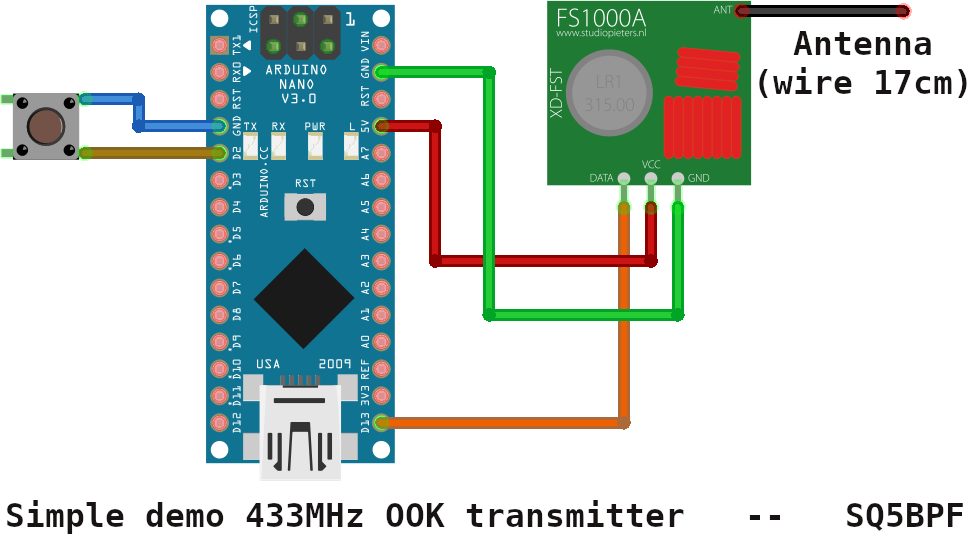
For this we will use an arduino nano board.
Wire it like this:
Arduino GND – TX module GND
Arduino +5V – TX module VCC
Arduino D13 – TX module DATA
Button connected between Arduino GND and D2
Antenna: 17cm piece of wire connected to ANT on the TX module.
Simple code to transmit
The code is written in the Arduino IDE. Not my favorite, but it is very well documented. Also the code is written to be simple to understand, not clever.
The code is avaliable here: https://github.com/sq5bpf/demowire
It will wait for a button press. When it is called, it will call the send_ooks(). The send_ooks() function will call the send_ook() function multiple times. The send_ook() function will send one frame. Each individual bit is sent using the send_bit() function.
Note: we could just get the 1 and 0 bits from the diagram on the triq.org site. However rtl_433 will write it in hex format, with the number of bits in parentheses.
So {33}dd762a6c8 means: convert this into a 33 bit binary number, transmit all bits, starting from the most significant bit. We will just paste this into the bytes_tosend array, and but the number of bits in BITS_TO_SEND.
To modify this code for your device, please provide: bytes_tosend , BITS_TO_SEND, change the duration of the on and off times (OOK_SHORT, OOK_LONG, OOK_BREAK), and provide an implementation of the send_bit() function if it is different than for my devices.
So does it work?
Yes it does 🙂
FAQ
I can’t receive anything using rtl_433 from my device
This device may be using other ISM frequencies (like 2.4GHz , 868MHz), or you may be in Asia where 315MHz is used in some countries. You can search for modules similar to the 433MHz one that work on the other bands.
Your code doesn’t ring my doorbell
Maybe you didn’t sniff the parameters using rtl_433 and put them in the code. Please try to run rtl_433 on the original transmitter and on your transmitter. Check for differences.
Cool, so I can ring my neighbor’s doorbell?
No, of course not. Be responsible 🙂
How can I help?
I have really tried to make this as easy to understand as possible. And to dis-spell the myth that this is “black magic” or requires expensive hardware. If you see anything that could be clarified in this article, please reach out to me.
Have Fun 🙂
VY 73 de Jacek / SQ5BPF